


Clinical Guides
These printable guides offer useful information on managing major depressive disorder, schizophrenia, and bipolar disorder in an easy-to-reference format.
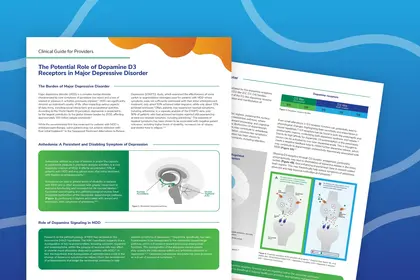
The Potential Role of Dopamine D3 Receptors in Major Depressive Disorder
This clinical guide explores the potential role of dopamine D3 receptors in the symptoms of major depressive disorder (MDD). Gaining insight into the neurobiological functions of these receptors may support providers in shaping more informed approaches to MDD management.
.webp?language=en-US)
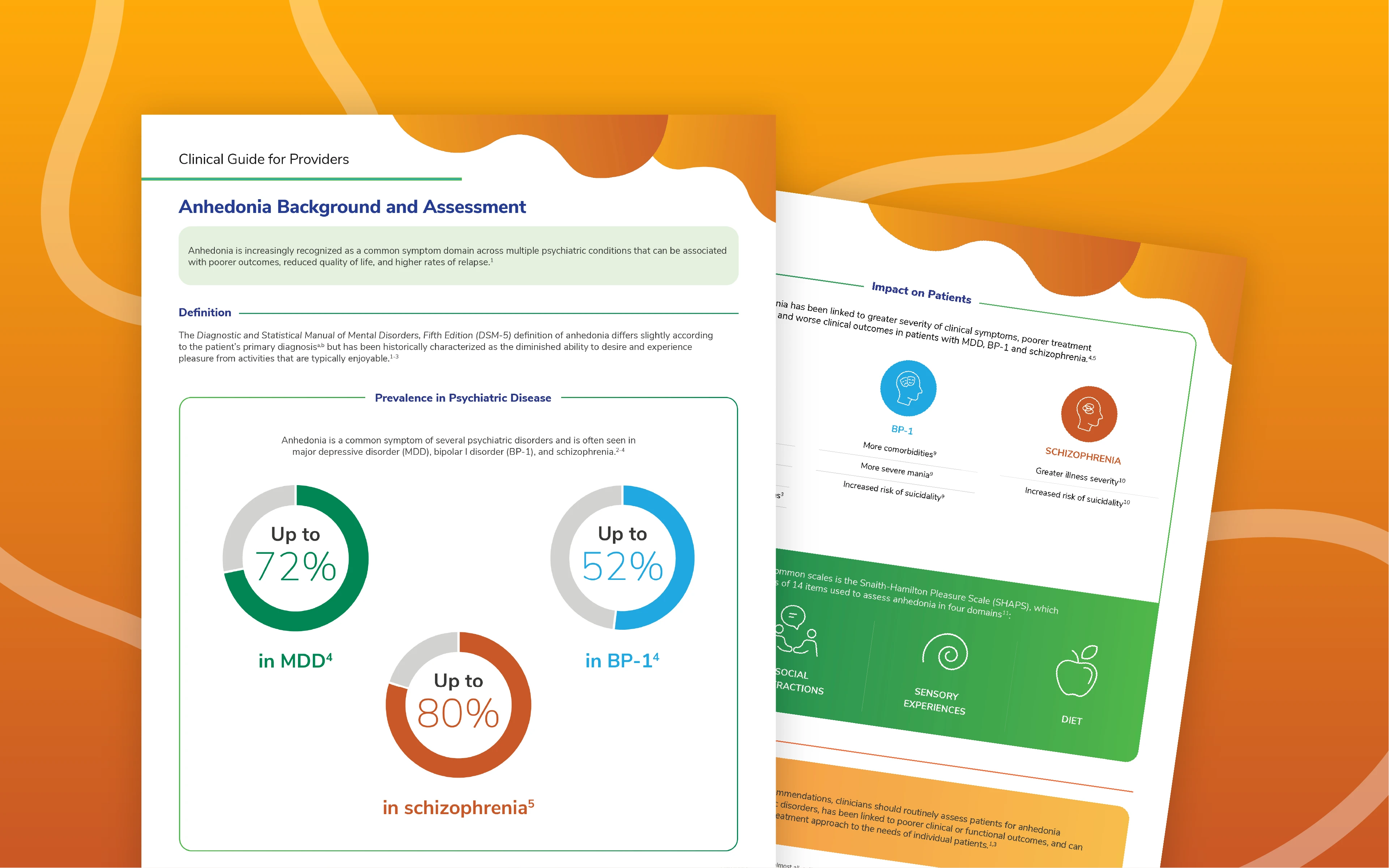
Anhedonia Background and Assessment
This clinical guide summarizes how anhedonia symptoms can present in psychiatric disorders, including major depressive disorder, bipolar I disorder, and schizophrenia, and reviews its links to greater clinical severity and increased suicide risk. It outlines common rating scales that include anhedonia items and provides simple, practical approaches to support brief screening and patient conversations in routine care. This resource is designed to help clinicians identify anhedonia early and incorporate its assessment into everyday clinical decision-making.
Download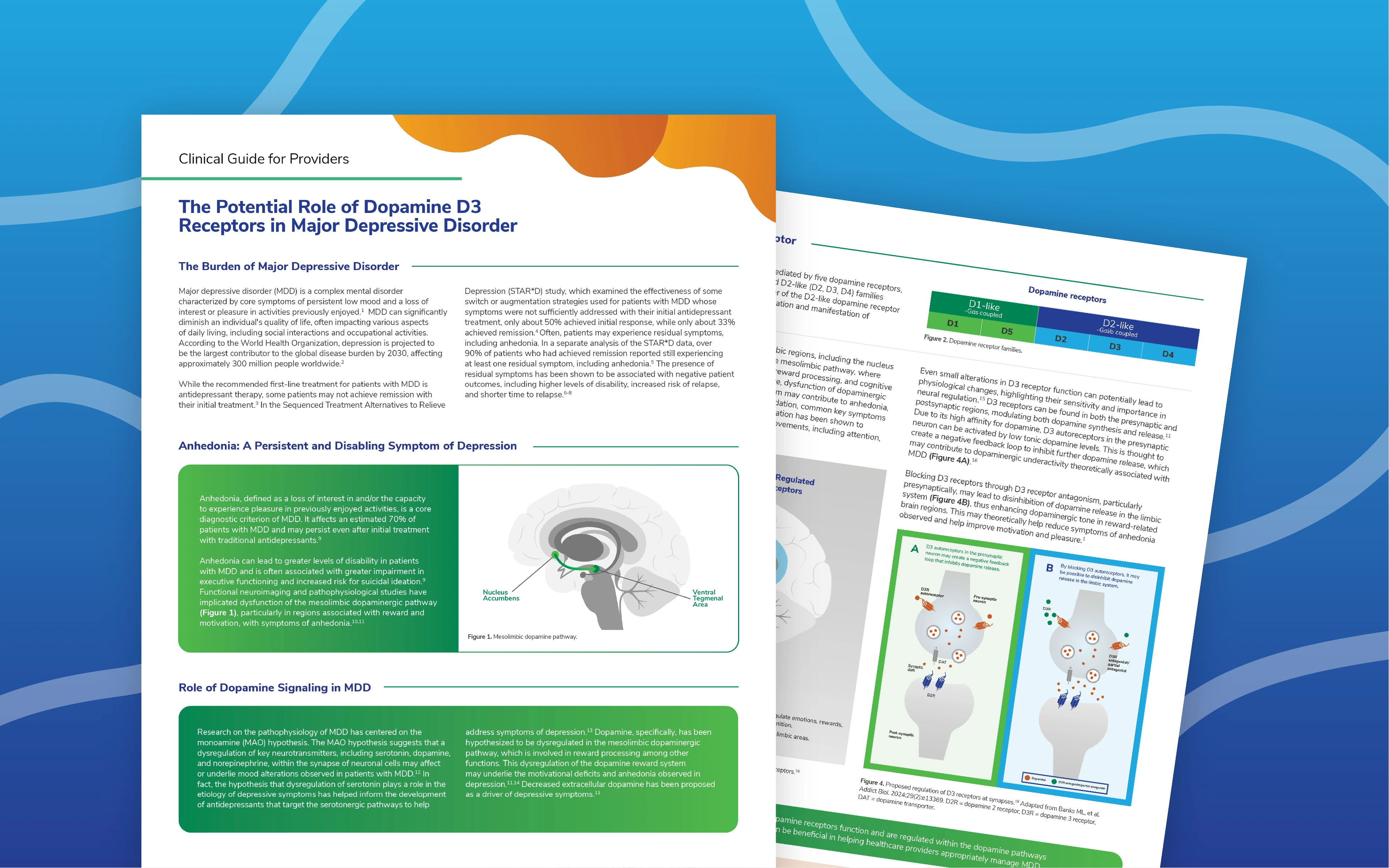
The Potential Role of Dopamine D3 Receptors in Major Depressive Disorder
This clinical guide explores the potential role of dopamine D3 receptors in the symptoms of major depressive disorder (MDD). Gaining insight into the neurobiological functions of these receptors may support providers in shaping more informed approaches to MDD management.
Download.webp?language=en-US)
Real-World Treatment Patterns in Bipolar Disorder
Bipolar I disorder (BP-1) is a complex, chronic, and often severe psychiatric condition that may carry considerable management challenges. This clinical guide highlights key findings from a large retrospective study examining how real-world treatment patterns for newly diagnosed patients with BP-1 in the United States align with established clinical practice guidelines.
Download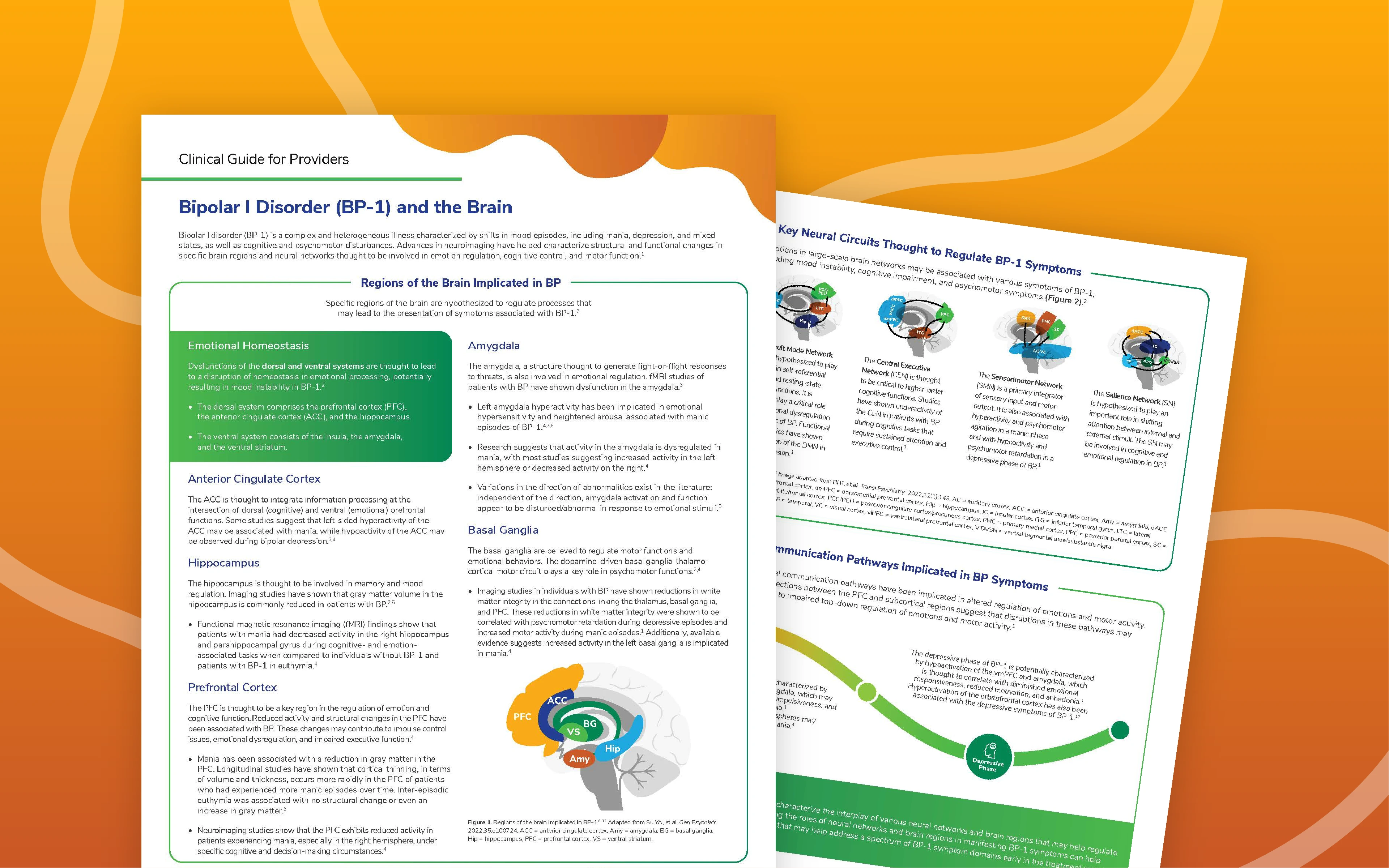.webp?language=en-US)
Bipolar I Disorder (BP-1) and the Brain
This clinical guide explores the brain regions and neural networks that may play a role in the symptoms of bipolar I disorder. Highlighting current hypotheses on how different areas of the brain are thought to contribute to mood, cognition, and behavior underscores the importance of understanding underlying neural functions in guiding clinical perspectives and care.
Download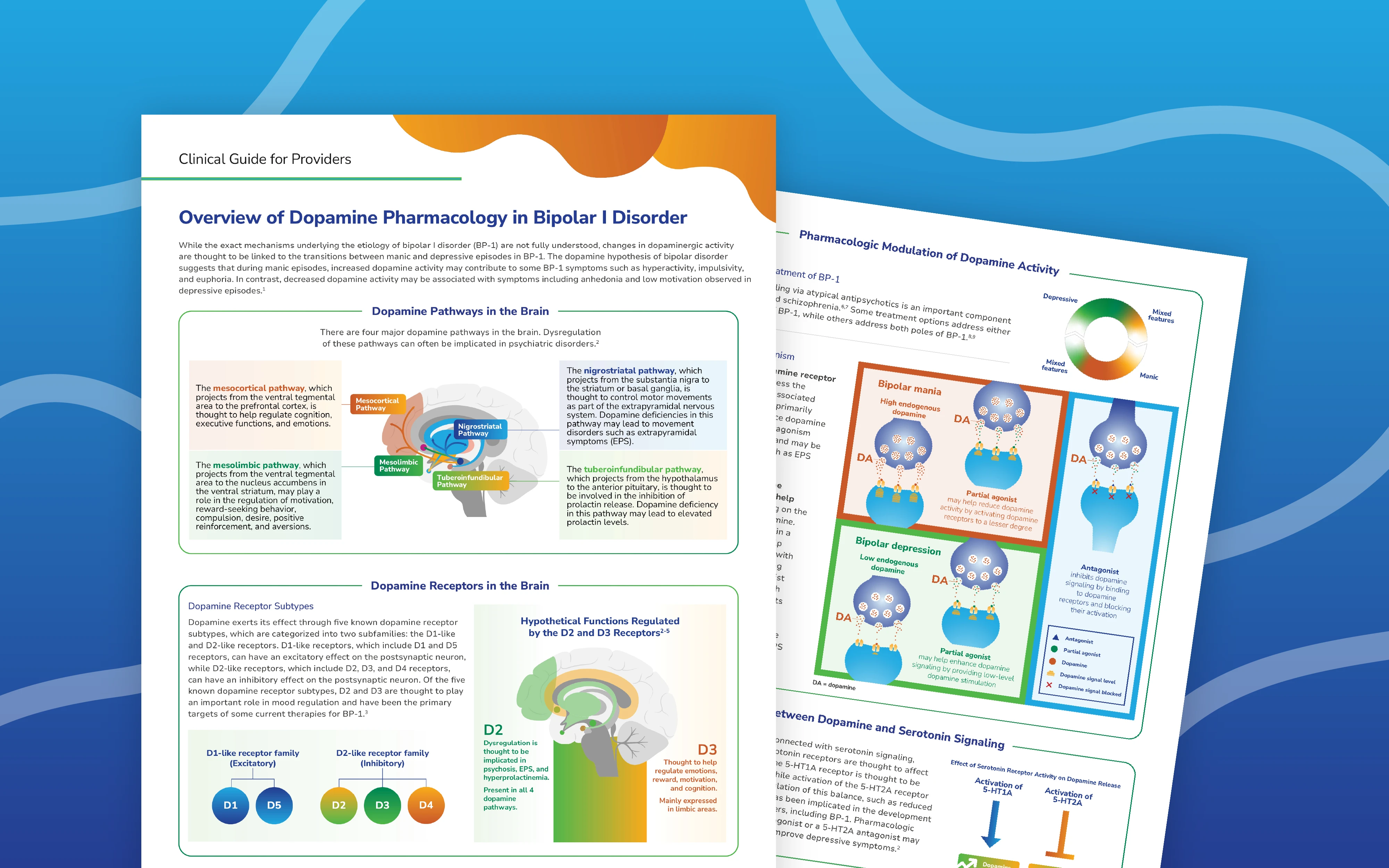
Overview of Dopamine Pharmacology in Bipolar I Disorder
Explore how dopamine signaling may influence mood states in bipolar I disorder (BP-1) and how certain treatments can help address symptoms of BP-1.
Download